Showing posts with label hike. Show all posts

Monday, April 25, 2011

Milford Sound and More!


Our final major stop was Fiordland, but before we got there, we stopped for a night in a lakeside town that probably had the most beautiful setting of all the towns we visited. Wanaka is a small town situated by a lake surrounded by mountains that flow right down into the lake. The wind was so strong the seagulls were having trouble, but we walked around a bit and then headed into a bar with a view of the lake. After a pint, we got some not-nearly-as-good-as-Tauranga fish and chips and then got some sleep. The next morning, we picked up some meat pies for lunch later that day and then headed to Te Anau, our launching point for our Fiordland trip.

We arrived in Te Anau and ate our meat pies by the lake. I had chosen mutton because we were in New Zealand, and it was OK but very dense (which made it good for taking with us). Emily had chosen the tastier pepper steak. We checked that off of our list of foods to try, leaving only hokey pokey ice cream. We then made reservations for our trip to Milford Sound and checked in to our hotel to find that it also had a trampoline and a place to hang our laundry, just like Turangi. We did some laundry, explored the town, and even tried hokey pokey ice cream, which is basically vanilla ice cream with butterscotch in it. I am not a huge fan of butterscotch, but this was pretty good. It wasn't hazelnut gelato, but not bad nonetheless. That finished our list of foods to try.

The next morning, our tour guide picked us up at our hotel at 8 am. By the time we were on our way, the van had some Brits, some Portuguese, and some more Americans. The two hour ride to the harbor was great for a couple of reasons. The first reason was that I was not driving so I could really enjoy the New Zealand scenery. The second reason was that the tour guide was an expert on the route since he drove it every day to deliver the mail. This meant he could provide us with a lot of information about the area, and he knew all the spots to stop for scenic views. We lucked out with the weather and were able to enjoy a sunny day, which, like the glacier, was not a given. On our drive, we stopped at an amazing meadow, some mirror lakes, and a one-way tunnel in which you actually descend as you progress through it.


A view of Lake Te Anau from one stop on the van ride.


The Mirror Lakes were ripple free.


The sign before the one way tunnel left us enough time to get out and enjoy the mountain views.


Once we reached the harbor, we boarded the boat and took our seats for the two hour cruise around Milford Sound. We learned that Milford Sound wasn't technically a sound because sounds are V-shaped valleys formed by rivers that are then filled by the sea. Milford Sound was actually a fiord, which is a U-shaped valley carved out by glacial activity and filled by the sea. Similar to the Franz Josef Glacier valley, waterfalls were plentiful and tumbled down the cliff sides. Our captain even drove the boat under a few. And unlike Tauranga, we spotted some dolphins. The most amazing aspect of the fiords is their scale. Being atop a mountain can provide a great view, but being at the bottom of a mountain or a cliff really makes you realize how big the land mass is. And we spent two hours at the base of a glacially formed valley.


The Sound / Fiord.


Waterfalls abounded.
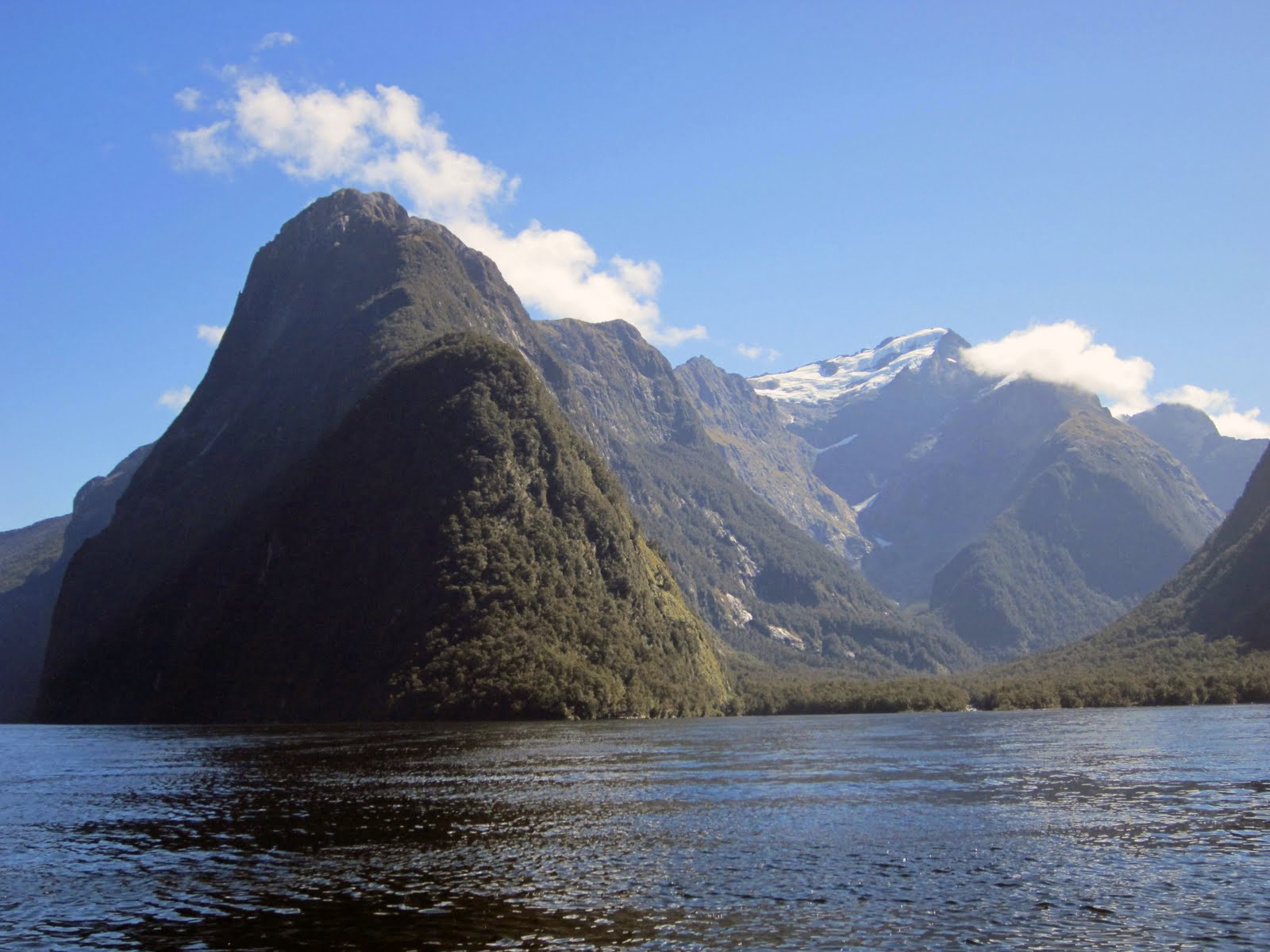

That's another glacier atop that mountain in the background. Looks like a patch of snow.


Clouds crowned the mountains.


More waterfalls!


This pic gives you some scale. That's a boat on the bottom left.


The kayaks at the bottom of this picture also provide some sense of scale.


Big waterfall and bigger alps.


As part of our tour package, we were dropped off for a two hour round trip hike up a mountain to Key Summit, which is part of the Routeburn Track. After our experience with Tongariro Alpine Crossing, the hike up to the top was a breeze. The views were of valleys carved out by glaciers. We even caught a glimpse of a cirque while up there. The most important event to occur on Key Summit, and indeed maybe the whole trip to some people, was our engagement.

Emily and I have always arrived at decisions together and getting engaged was no different. After being a couple for six years, we had already decided that we would like to get married, and we thought New Zealand would be a great place to make our intentions official. While there were plenty of places along our trip to make public or grand romantic gestures, atop a volcano or a glacier or maybe deep in a glowworm cave (yeah, that didn't seem like a good idea), we are both private people and wanted to really make the moment our own.

We were in New Zealand, where Emily had always wanted to visit, and we had just spent a day cruising across a fiord, something I had always wanted to see. Though Emily (being the more practical of the two of us) did not want a rock, we did want to have a memento of our first official commitment to each other. In the town of Franz Josef, we had purchased jade pendants, each of which depicts two shoots growing together and represents the bonding of friendship. After our hike to the summit, we found a small setting off the path and gave each other the pendants. As we were talking, two doves flew up out of the bushes, a sign that we were making the right choice and belong together--OK, that didn't really happen because it wasn't a movie. Instead, we sat and talked about our future together, our families meeting, and some of our expectations in life. We then made our way back down the mountain, an engaged couple for the first time.


The view from Key Summit.


Another shot of the vistas.


The cirque was pretty cool.


Our first picture as an engaged couple.


We hung around Te Anau another day, where we finished up some shopping and enjoyed our first day as an engaged couple together. Actually, Emily came down with some flu bug and I had to finish the shopping on my own and buy her some soup for dinner. But hey, that's really what being married really is, right?--looking after each other. A week later, I would catch what she had and she'd take care of me.

We enjoyed our time in Fiordland and spent the next couple days making our way back to the states. We spent an afternoon and night in Queenstown, which is another beautiful lakeside city. We wandered a park there and sat in a cafe along the main strip, where I had a beer and Emily a coffee. The next morning, we dropped off the Nissan Sunny at the airport by parking it and dropping the key in an unattended box. Our flight back to Auckland was easy, but we had selected a hotel near the airport, which meant we were stuck in suburbia for an afternoon. What do you do in suburbia? You walk to a mall, buy some smoothies, and then have some pizza for dinner, which is exactly what we did. Not exactly a crazy finish, but it got briefly exciting the next morning.

We had chosen our hotel (which was currently being improved to a sale-able level as the hotel manager/shuttle driver told us) because it offered a free shuttle to the airport. Unfortunately, the system they used to schedule early morning shuttles (a pen and paper) simply sucked. So, we awoke at 4 am to find that we had no ride. At least there was somebody at the desk to call us a cab, and we got there in plenty of time but we ended up paying for our cab. Don't stay at the . . . I don't remember the name of the hotel, so just avoid staying in Manakau if you can. We slept very little on the flights back, but made it to LAX, were greeted by my sister and niece, took a nap, had some dinner, and headed to San Diego the next morning to move all of our stuff out of a Pod. So, our trip did end kind of crazy--moving in to our new place super tired. And that, folks, was the end of our New Zealand vacation.

Sunday, April 17, 2011

Franz Josef Glacier


The second coolest (no pun intended) day in New Zealand, after the caves, was our tour of the Franz Josef Glacier. We drove from Takaka, back up that super scary road in drizzle. Luckily, it was only drizzle at that point; after that, it was pretty heavy rain the rest of the trip. With our Nissan Sunny wipers mostly working, we proceeded slowly, taking a full eight hours to get from Takaka to Franz Josef Glacier town. Of course, we took a route that was supposed to be one of the top ten scenic drives according to some list that must be wrong, and that took a little longer. From that drive, I decided two things: 1) scenic routes in the rain are not worth it, and 2) scenic routes are way better if you are not the driver. But we made it to our hotel, which was a renovated farm house with a sheep and plenty of cows nearby. They mooed all night.


You can see the cows lined up in front of our hotel as we approached.


Emily meeting one of the farm natives. The sheep was interested until she realized we didn't have food.


We awoke the next day to more drizzle and called the tour company to check if the weather would still permit our tour. They said yes so we headed to the office, where they gave people the option of rescheduling because the day could get wetter and colder than usual. After the chickens rescheduled, we received our gear, which covered us from head to foot: beanie, long waterproof and windproof jacket, wool mittens, waterproof pants, wool socks, boots, and crampons, which came in an red fanny pack. We then loaded onto the bus and headed to the start site.

To get to the glacier from the parking lot, we hiked about half a mile through a rain forest. There are three glaciers in the world that are situated right next to rain forests and two of them are in New Zealand: Franz Josef and Fox Glaciers. After the brief hike, we came out onto a field of broken rock called a moraine. Once upon a time, the glacier extended all the way to where we emerged from the forest. Later in time, during the glacier's retreat, the moraine was the bottom of a lake. But now it was dry enough to walk on. Our exit from the forest provided us our first view of the glacier, which didn't actually look that far away. However, we had a solid mile to hike in our boots that weren't all that comfortable.


Exiting the rain forest provided a spectacular view of the glacier's terminal face, which looked like a frozen river.


The hike across the moraine, though subject to a bit of drizzle, left little to be desired. The rocks on the valley floor had interesting textures and patterns from being ground under a glacier. The moraine was walled on both sides by steep granite mountains covered in rain forest foliage. Tens of waterfalls tumbled down both walls to the valley floor. And straight ahead was our target, a flowing mass of ice that wove its way down into the valley between two walls of granite.


I took a lot of pictures of rocks because I was a bit mesmerized by them. If you think this picture is boring, be glad I didn't post all the pictures of rocks I took.


Waterfalls fell from the tops of some cliffs surrounding us.


Here's what I remember about the glacier from the guide. The glacier consists of two main parts, the terminal face, which is what we could see and would hike, and the neve, which is where the glacier is fed. As moist air is blown in from the ocean to the west, it rises quickly as it hits the Southern Alps. Water condenses and snow falls onto the neve on 200+ days per year at an altitude of over 8,800 feet. This creates a huge ice pack under great pressure that is released by flowing into the valley, which is at an altitude of 800 feet. The huge drop in altitude that happens over about 6.5 miles and increases the temperature so the glacier is constantly melting on its terminal face. I don't remember how fast our guide said the glacier moves nowadays, but in the past, it has moved at rates of 70 cm per day, which is ten times faster than a normal glacier. The result is that it is constantly changing, melting and being resupplied by the neve. Come back a year later--completely different. A week later--very different. Two days later--the ice cave that was there before may be gone. It made what I always considered of a geologic feature (I know--it's made of ice, not rock) feel very alive, moving on a fast timescale for geology.

On our way across the moraine, we stopped to gaze at some of the more impressive waterfalls and the river that was exiting from the glacier. The river water was gushing from the opening, and it carried rocks that crashed into each other on their journey, giving the water a dirty but milky brownish color.


Some more waterfalls.


The river exited the glacier at high speed and low temperature. This picture also starts to put the glacier in perspective if you notice the tiny dots of people on the hill to the right.


We then proceeded to cross the rope fence that was meant to warn unguided visitors of danger. Uphill for twenty minutes and then it was time to put on our crampons, meaning it was time to get on the ice. They were surprisingly easy to lace up.


This is one of the signs warning people to take a guide with them.


Up a scree hill for a bit.


The view from the top of the valley made the first little hike well worth it.


Lacing up the crampons.


I used to think those old metal golf spikes were aggressive.


We needed crampons because we were about to jump onto this.


Hiking up the ice was made much safer by the work of our guides earlier in the day. They spent hours each morning cutting steps into the ice, which allows groups to get to higher elevations. We were on the ice for around two hours, and in that time, we saw some really awesome formations and views. Even the pictures don't do them justice, but they are better than me typing about them. Another bonus was that the rain stopped, and it was pretty warm for the glacier. We even got rid of our hoods and mittens.


A little bit of perspective on how large the terminal face is. Notice the guy in red on the top in the center.


We saw an awesome ice cave, but weren't allowed to enter because it could collapse at any time.


Some of the ice looked like it was whipped into its shape by beaters.


Some ice looked very aggressive.


Regardless of how cold the terrain was, the views were always amazing.


We didn't hike all the way up, but it looked pretty rugged.


We even got to hike through a tiny crevasse.


This is what the crevasse looked like from the other end.


After expecting to get super cold and wet, I was pleasantly surprised by the good weather and how spectacular the entire glacier experience was. I would return in a heartbeat to see it again because it would be a completely different surface to explore. Happy with our day, we wandered around town and eventually headed to bed, sleeping through the lowing of the cows. Our next big stop was fiordland, which proved to be every bit as impressive as I imagined it would be.

Wednesday, April 13, 2011

Tongariro Alpine Crossing (Let's see how unfit we are)


One day, eight hours, 12 miles (19.4 km), a climb of almost half a mile (765 m), a descent of seven tenths of a mile (1,126 m). Numbers were just numbers until our lungs realized what they meant during the ascent and our knees felt them the day after. Yet, the numbers were often pushed to the backs of our minds as we walked alongside massive volcanoes, red craters, and emerald green lakes. Tongariro Alpine Crossing was a beautiful hike that convinced us of two things: 1) we were not in good shape--thanks, grad school, and 2) we would like to do more hiking in the future.

We caught a shuttle at 7:00 am to the beginning of the Crossing; and by "caught a shuttle," I mean that the owner of the hotel drove us in our Nissan Sunny to the starting point because the shuttle bus had dropped off a bunch of people at 6:30 am. Interestingly, our driver used to run races near Notre Dame and had run the entire route we were about to hike in less than an hour and a half. The night before, we had been advised to wear multiple layers and waterproof outerwear. The beginning of the hike was chilly, but we soon warmed up. For about an hour and a half, we hiked a gradual incline through fields of tiny white flowers, brush, and jagged lava formations. Then we came to the warning sign, letting us know that things would be very tough from that point on.


Lava rock formations looked like large chunks of chocolate on the field.


White flowers looked like layers of marshmallow. We just needed something that looked like a giant graham cracker to have a S'more-y landscape.


Before the first ascent, we were warned that the rest of the hike would not be simple.


The first major ascent provided us with great views of the lava rock-filled valley we had just hiked and mountains in the distance. Our nemesis soon became the wooden stairs on the climb that forced us to take the same size steps over and over. We would pass people who were taking a break, and they would pass us a few minutes later as we rested. But the rests gave us time to enjoy the views.


A view of the valley from the first ascent.


The stairs probably reduced erosion but increased difficulty for us.


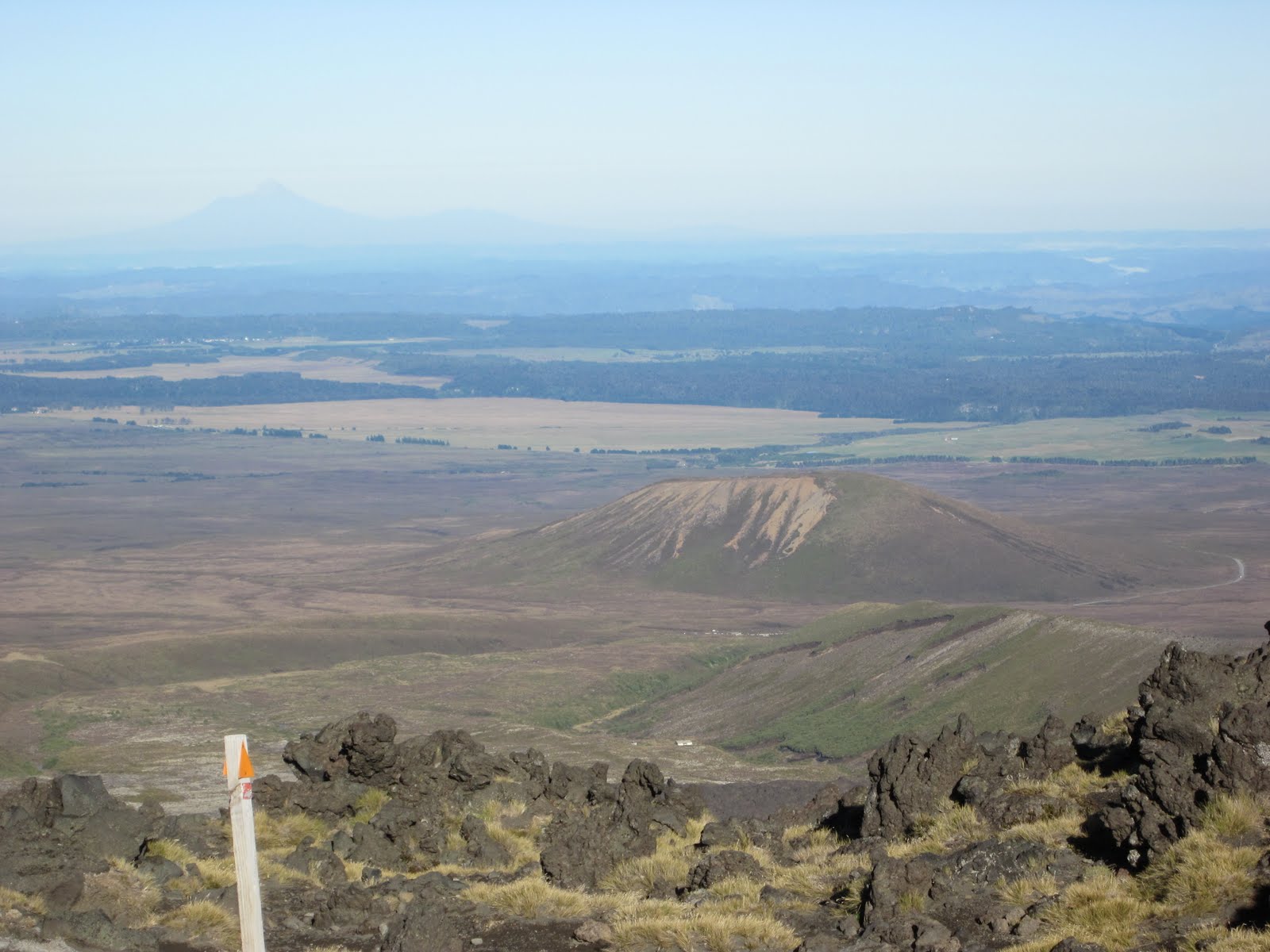
Eventually, we finished the first ascent and had a snack while sitting right next to Mt. Ngauruhoe, also known as Mt. Doom to Lord of the Rings fans. There was a "path" up to the peak of the volcano, but we wanted to finish the hike without becoming too familiar with a giant, slanted scree field. But Mt. Ngauruhoe was impressive to see in its barren massiveness. The first picture of the post shows it.

After climbing through so much rock covered landscape, our next leg felt strangely empty and surprisingly flat. The South Crater was completely different in that it was a giant valley of packed dirt. I liked it because its flatness and nakedness reminded me of a moonscape. Unfortunately, it was followed by the second ascent that lacked nice wide stairs, which were replaced with loose dirt and rock along a narrow trail. I wouldn't say it felt dangerous, but the there was just enough uncertainty that it took my mind off of my unfitness. It took us past the Red Crater, which was a steep, uh, crater that was, uh, red. Despite my description (or the description of the guy who named it), it was actually very impressive.


Us in the flat South Crater.


The second ascent began after the South Crater without any tidy stairs.


The view of Mt. Ngauruhoe from the second ascent


The Red Crater was indeed quite red.


Emily checks out the Red Crater.


After the Red Crater, we reached our highest point on the main route at 6,187 feet, which is a little higher than Denver. There were two higher side trips up Mt. Tongariro and Mt. Ngauruhoe that were possible, but we were doing well enough to make it up the main route. Our descent required even more care than the second ascent because the path was loose dirt and rocks all the way down a steep incline. Some people chose to take the loose rock path, but I found that walking in soft dirt decreased the chances of slipping. The initial hike down was made more difficult by the amazing views of the Emerald Lakes, which drew your eyes away from the path.


After passing the Red Crater, we saw geothermal steam, the Emerald Lakes below us, and Blue Lake in the distance.


The descent towards the Emerald Lakes was a little precarious.


The Emerald Lakes were quite a sight though.


After managing the slippery initial descent, we hiked across another crater called Central Crater and had a picnic lunch of pita bread, salami, and trail mix next to Blue Lake. We felt good having the strenuous parts behind us.


We decided to eat the food we packed in by Blue Lake.


Not a bad lunch time view.


In the other direction, we could see Red Crater in front of Mt. Ngauruhoe.


The rest of the descent consisted of long, winding switchbacks of packed dirt. And since the endpoint was lower than the starting point, we had to descend even farther, which was not great for our knees. The final mile or two was wooded forest that finally opened up into a parking lot. We waited there for about 20 minutes until our shuttle picked us up and took us back to the hotel, where we settled the bill and drove to our next destination, Turangi, where we planned on doing some relaxing.


The descent after lunch also provided some great vistas.


The switchbacks were long and gradual; our knees would have preferred a little less downhill.


A chart at the end of the hike showed our elevation changes. We actually started on the right side of this graph.